
What do you absolutely need to know when starting to produce?
Home 2023 › Forums › The DJ Booth › What do you absolutely need to know when starting to produce?
- This topic has 23 replies, 1 voice, and was last updated 13 years, 1 month ago by
kade_14@hotmail.com.
-
AuthorPosts
-
January 24, 2013 at 6:50 pm #35636
Nick Powers
ParticipantWould you recommend buying The Dance Music Manual?
January 25, 2013 at 7:09 am #35661Terry_42
KeymasterNo.
Actually (even though the title is silly) the book “How to write a Pop Song” has more info in it.January 30, 2013 at 7:52 am #35956softcore
MemberLots of good advice has already been posted….I’ll just add a few points:
1. There is no shortcut for knowledge – learn the basics of terminology even before starting to watch tutorials and read more advanced books – if you dont know what swing is, if you dont know wnat unison or glide is, if you dont know what oscillator is, you ‘ll have a big trouble comprehending lots of stuff written in books and shown in tutorials. Get the terminology down first.
2. Listen to your favourite music – AS A PRODUCER. Throughout the years, the main problem I have seen DJs face is the lack of interpretating what they hear to meaningful, measurable, scientific terms that can help them go along. Listening a track and thinking “ohhhh I want that “warm” bass” wont get you far – why? Because sound doesnt have temperature. You need to find the ways to translate your “DJ” interpretation of sound to a producer’s interpretation of sound…..What did you really mean by saying warm? Bassy? The lack of very high frequencies? Perhaps a litle distortion – saturation?
Always remember, sound is 99.99% of all times described by amplitude and frequency range – even notation doesnt escape this rule. Notes and tonality are essentially frequency ranges….The rest of the everyday characterisations (warm, dirty, crystal, raw, thumping, pumping) are “people’s” notion.3. Music is an illusion! (following the idea introduced in no2 tip). Producers are the David Copperfields of sound. A frequency spectrum and the levels of sounds is all they will ever have to set the “stage” and “trick” their audience into hearing what they want them to hear.
Was that a sound that just came into my face, exploded and left away or was it just a rising noise followed by sampled explosion and then reverb with automated low pass filtering applied to it? 😉4. Listen to your favourite music – AS A PRODUCER no2. Study the structure, composition wise of your favourite tunes. Notice when and how elements go in and out of the mix. Timing is very important in music. Also take notice of their relative amplitude, their levels against other elements’ levels in the mix.
5. Experience is indeed a “key element”. Dont get stuck in one tune for the rest of your life, trying to make it perfect. You ‘ll have progressed far more by having finished 10 “mediocre” tunes than just a super-worked one in the same amount of time. Finish your tunes….Finish your tunes….FINISH your tunes – ready, wav files to be played in your buddy’s hi-fi, in your car, anywhere. FINISH your tunes!
6. Did I mention finishing your tunes?
January 30, 2013 at 11:00 pm #36006ParticipantThank you guys for all the help, I feel I can head in a more solid direction now
February 2, 2013 at 2:02 pm #36094Marcel
Participantstarting with brick-software like Magix Music maker or ejay can give you basic understanding in arrangement 😉
February 3, 2013 at 7:35 am #36111DjDemonick
Memberthis wont help “build a song”, but when I started playing with production, I found it helps to put on a really nice pair of headphones, Listen to a track you’d like to emulate, find one specific sound (for instance a low detuned saw that is barely audible) and watch tutorials on how to make them. then once you understand how types of sounds are made, its easier to make them your own.
February 20, 2013 at 4:45 pm #36965little komodo
MemberDjDemonick, post: 36267, member: 3963 wrote: this wont help “build a song”, but when I started playing with production, I found it helps to put on a really nice pair of headphones, Listen to a track you’d like to emulate, find one specific sound (for instance a low detuned saw that is barely audible) and watch tutorials on how to make them. then once you understand how types of sounds are made, its easier to make them your own.
This is exactly what I did and to be honest I don’t know how much this actually works. I spent two years trying to emulate possibly some of the hardest sounds in the DnB scene (you can take a guess at who…) and all I got was a bunch of ‘ok’ sounds but they never reached the level where I thought I could really promote and expand on it. Imitation is a limiting way of learning – most of the time you never quite reach what you want to achieve.
I’m not discouraging this though, I definitely made some decent samples and sounds with this method that I could never quite harness. If you do take this route though: anything you think sounds good/decent/strange, SAVE IT AS ITS OWN SEPARATE .WAV FILE. I set up a file for all the strange synthesis I made when producing. Samples are stored by month and year. Resampling is one of the greatest methods for finding a unique sound and it takes a considerable amount of time to get something right. But after building up a collection of years of samples, I look back at them every once in a while (months or years later) and have another go at combining a few in the sampler, chuck em through a few fx chains and I finally get something that sounds sick. I think Noisia recommended this in an interview in about 2006, and to this day I think it’s some of the best advice I’ve ever been given.
February 21, 2013 at 4:30 am #36986kade_14@hotmail.com
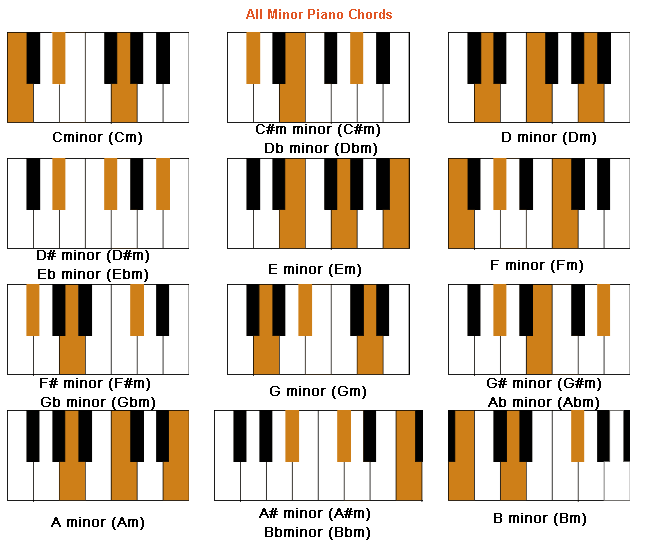
ParticipantAs stated above, the single most important thing i have realized to learn is, scales and chords ect… it helps so much much i feel like everything makes more sense when i am arranging songs. Such as this
-
AuthorPosts
- The forum ‘The DJ Booth’ is closed to new topics and replies.